Motorhome or towable: what changes
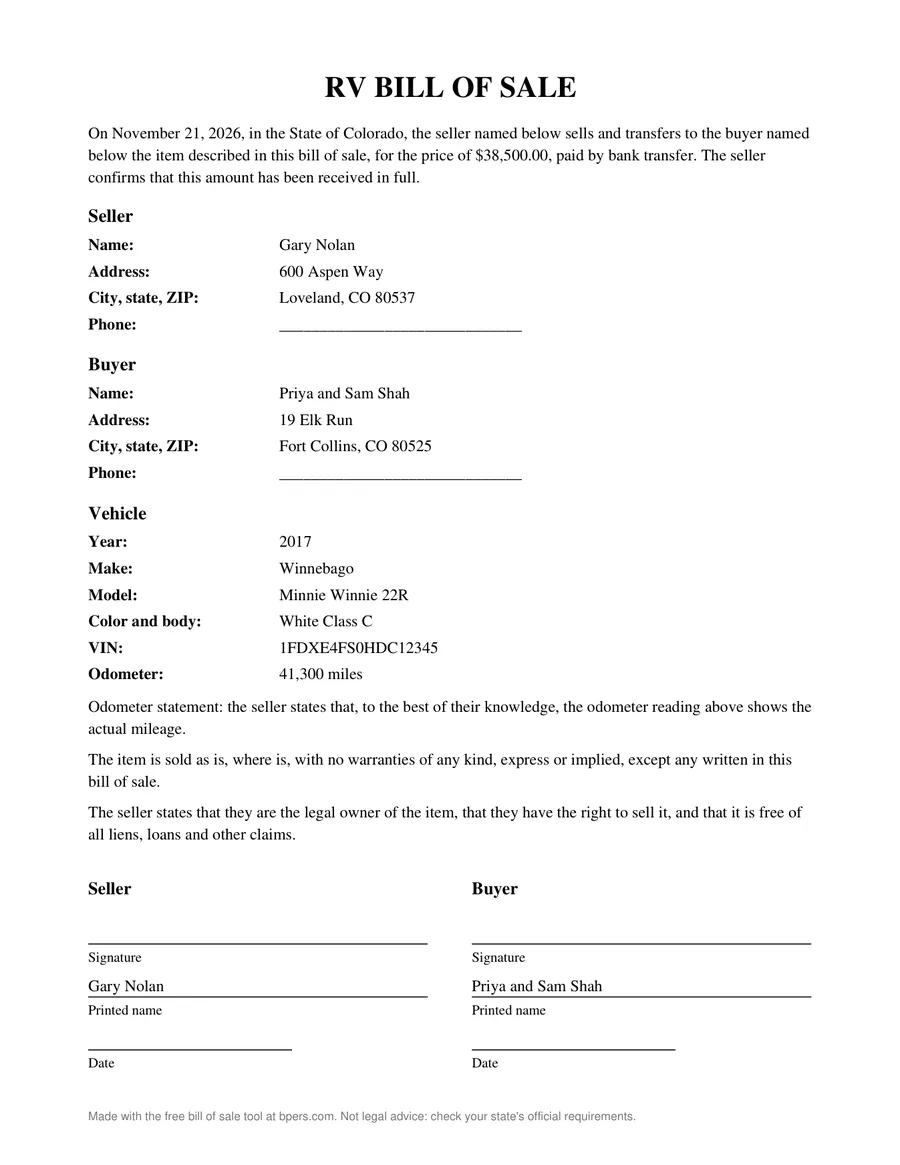
A motorhome drives itself, so it is a motor vehicle with an odometer. A travel trailer, fifth-wheel or pop-up camper is towed, so it has no engine mileage to state.
Federal odometer rules exempt anything that isn't self-propelled and any vehicle over 16,000 lb gross weight rating, which includes many large motorhomes (49 CFR 580.17). For a towable, leave the odometer line empty; for a smaller motorhome, fill it in.
List what comes with it
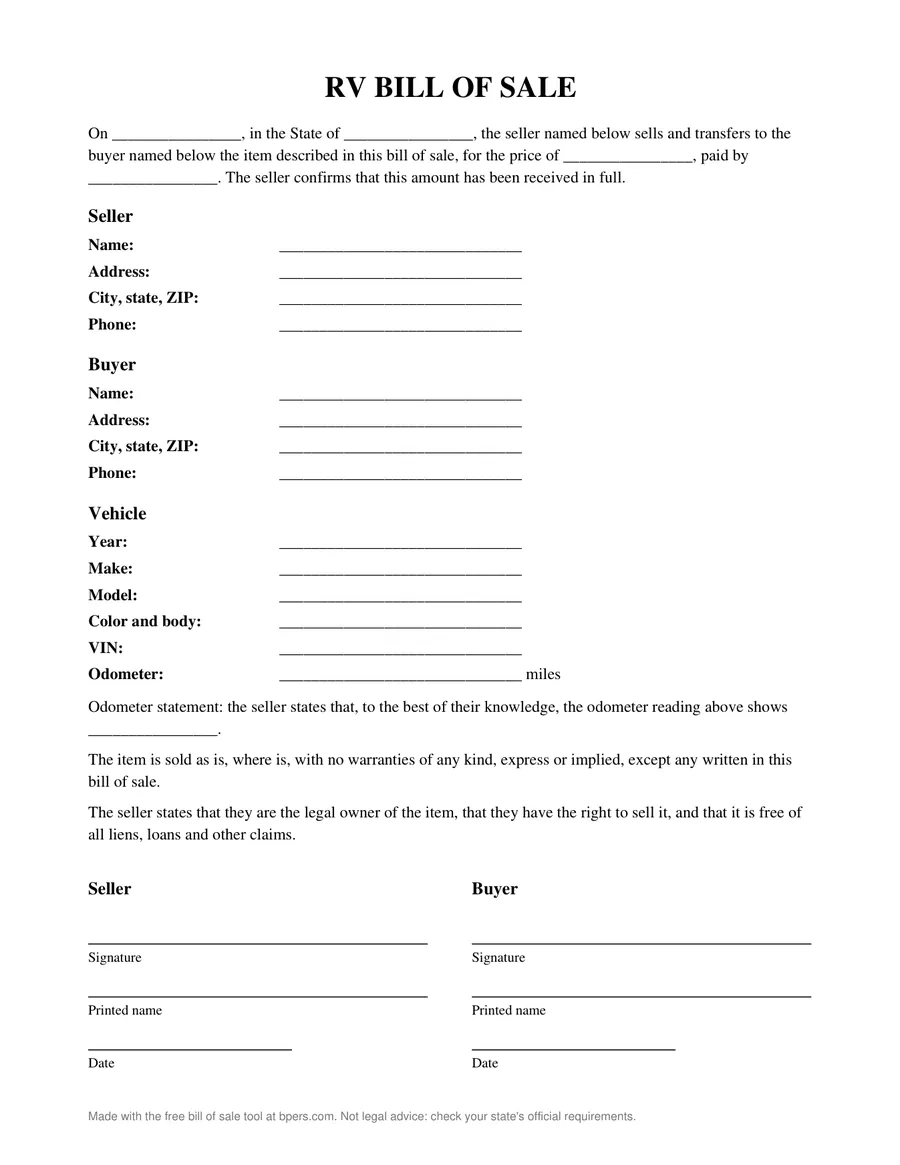
RVs are often sold with a generator, awnings, a hitch, kitchen gear or a tow car. Write anything included in the price under "Other terms" so both of you agree in writing.
What buyers check before paying
Water damage is the costly surprise in a used RV, so look for soft spots in the floor and stains on the ceiling around vents and the roof edges. Run the slide-outs, the generator, the fridge on both power sources and the furnace. A towable also needs a look at the tires, which age out before they wear out, and the hitch and brakes. Anything the seller promises to fix belongs in "Other terms".
After the sale
A motorhome is titled and registered much like a car. A towable often has its own title and plate too, and some states register it like a trailer. Either way the seller signs the title over and keeps this sheet; the buyer insures it before towing or driving it away, then registers it with the DMV.
Common questions
Does a travel trailer go here or on the trailer page?
Here. Anything built to live or sleep in belongs on the RV bill of sale.
Where is the VIN on an RV?
On a motorhome, in the usual car places (windshield and door frame) and on the title. On a towable, usually on the front of the frame or near the entry door.
Do I need a notary?
Some states ask for one. Tick "Add a notary section" if yours does.
Sources
- 49 CFR 580.17: odometer disclosure exemptions (eCFR)
- 49 CFR Part 565: vehicle identification number requirements (eCFR)
Last checked November 26, 2026.