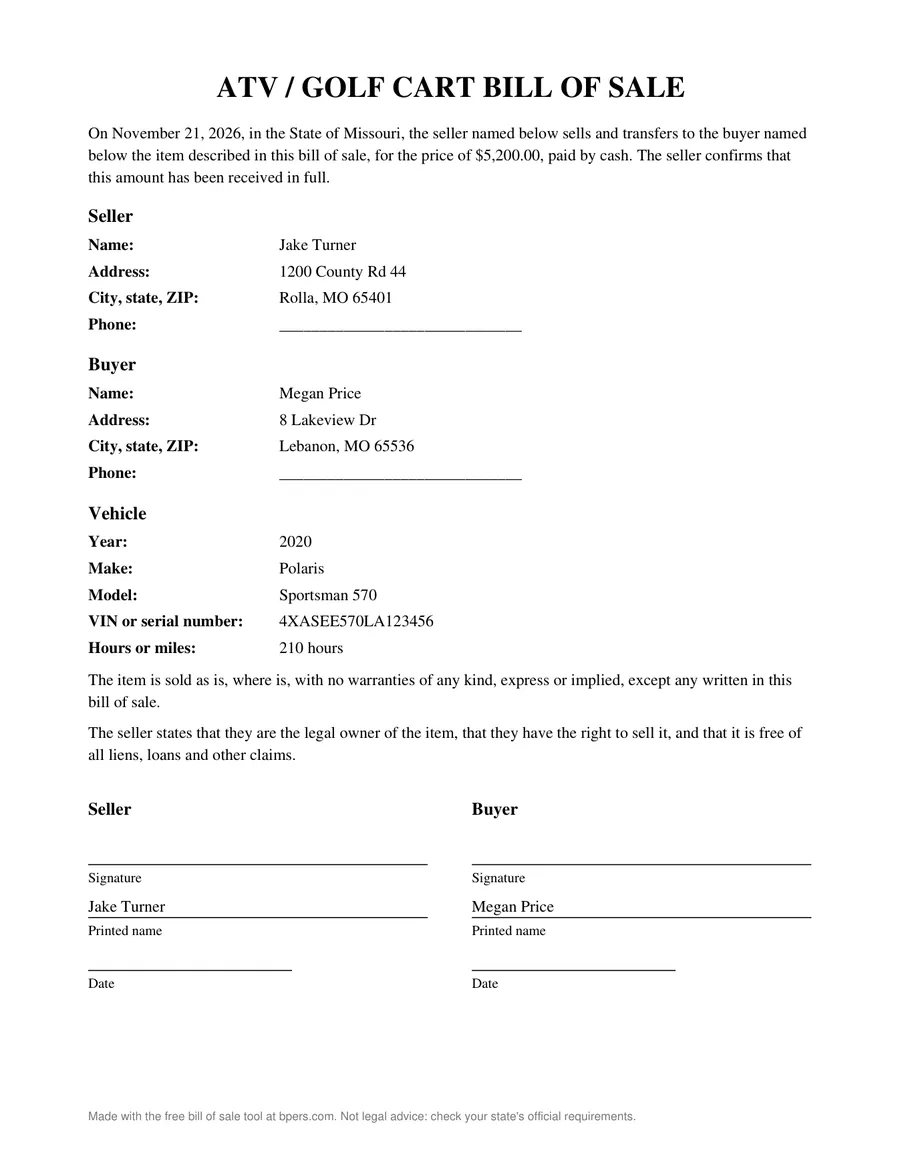
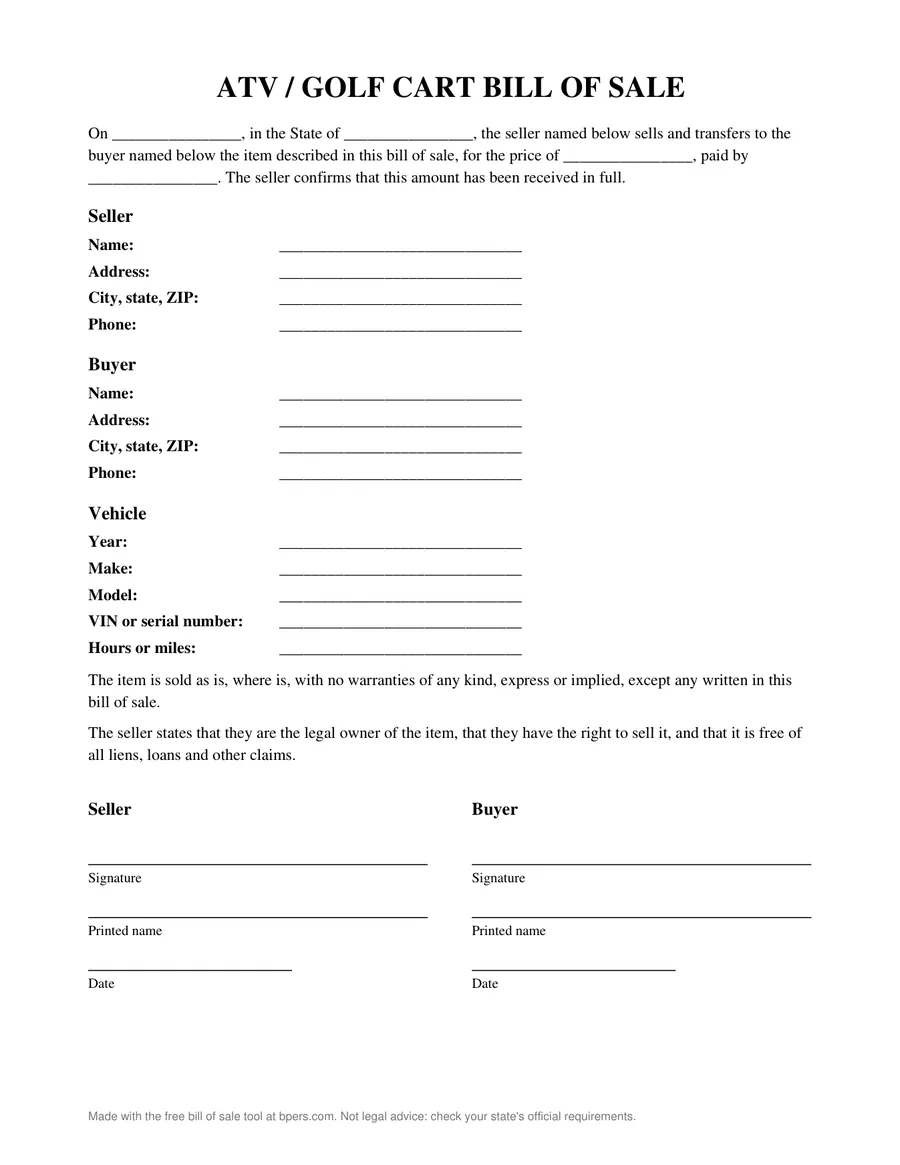
VIN or serial number
Most modern ATVs and UTVs have a 17-character VIN on the frame, often near the front or under the seat. Golf carts usually have a serial number on a plate or sticker, commonly under the seat or near the steering column. Copy it from the machine and check it against any title or receipt.
Hours instead of an odometer
Off-road machines often show engine hours rather than miles. Write whichever the gauge shows in "Hours or miles". This sheet leaves out the federal odometer statement, which is written for road vehicles.
Checking a used ATV or cart
Hours tell you more than looks. Ask how it was used (farm work, trail riding, racing), check the CV boots, bearings and frame welds for cracks, and start it cold. On an electric golf cart, ask how old the batteries are and how far it goes on a charge: a battery set is the biggest cost in a used cart. Note anything agreed under "Other terms".
Titles and registration
States treat these very differently: some title and register ATVs, some only register them for trail use, and golf carts are often untitled unless they have been made street-legal as low-speed vehicles. A bill of sale is your proof of ownership either way, so keep it.
Common questions
Can I use this for a side-by-side?
Yes. UTVs and side-by-sides fit here, as do dirt bikes that are not street registered.
My golf cart is street-legal. Which page do I use?
This one works. If your state titles it like a car, the title transfer still applies.
What if there is no serial number?
Describe the machine (color, model, any distinctive marks) under "Other terms".
Sources
Last checked November 26, 2026.