What an offer letter is for
An offer letter puts a verbal job offer in writing, so the candidate can see exactly what was agreed before giving notice at their current job. It also gives you a signed record of the terms both sides accepted.
Keep it short and factual. Anything you promise here, such as a bonus or remote work, the candidate will reasonably expect, so include only what you mean to deliver.
What to include
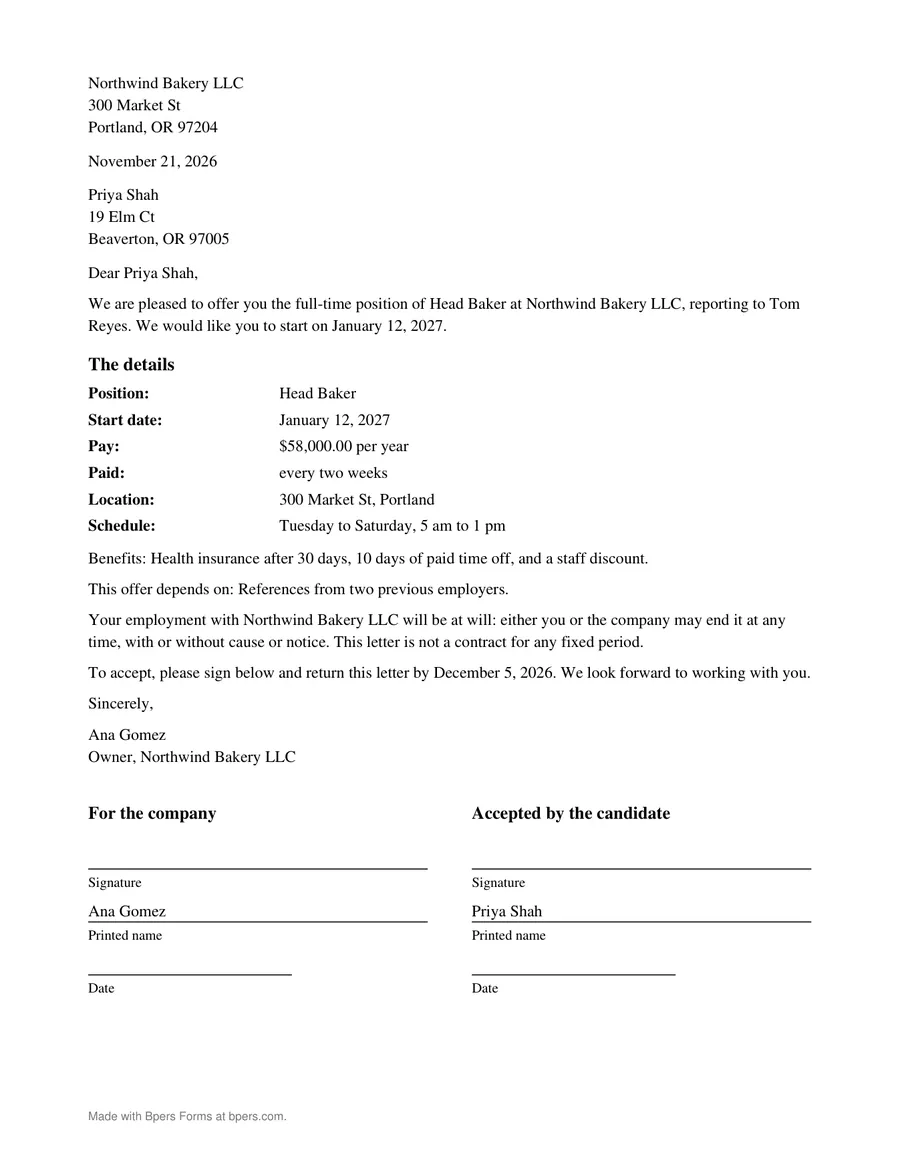
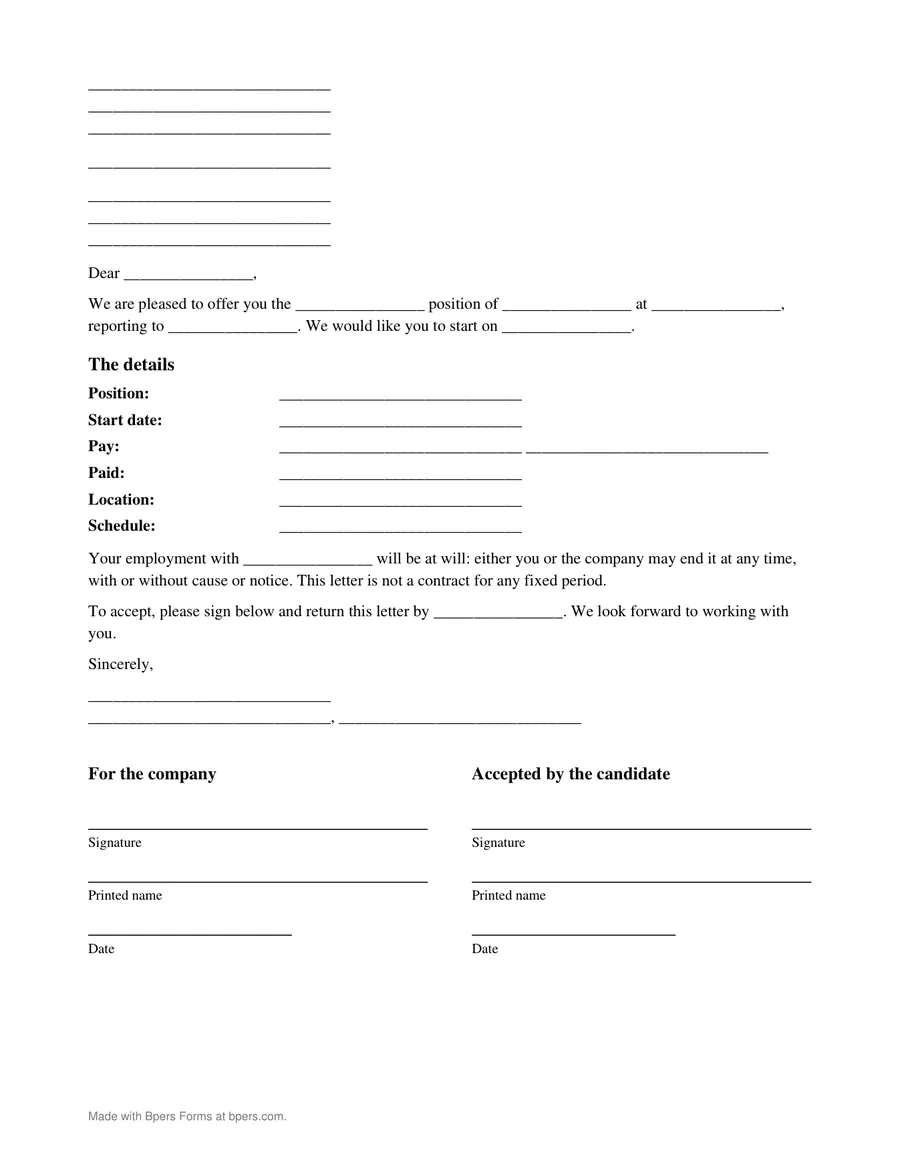
- The job: title, full-time or part-time, and who the person reports to.
- Money: the pay figure, whether it is per year or per hour, and how often it is paid.
- Where and when: start date, location (office, remote or hybrid) and normal hours.
- Conditions: anything the offer depends on, like a background check or references.
- A reply date, so an unanswered offer doesn't stay open forever.
About the at-will paragraph
Many US employers state that employment is "at will", meaning either side can end it at any time. The paragraph is on by default; untick it in the panel if it doesn't fit your situation. Rules differ by state and by contract, so check with an employment adviser if you are unsure whether it applies to this job.
Sending it
Call the candidate first, then send the PDF as a follow-up. Once they sign and return it, keep the signed copy with their hiring paperwork and send them a copy too.
Common questions
Is an offer letter a contract?
It can create obligations depending on its wording. The at-will paragraph makes clear it is not a promise of employment for a fixed period.
Should salary be yearly or hourly?
Use whatever matches how the person will be paid: a yearly figure for salaried roles, an hourly rate for hourly ones.
Can the candidate sign electronically?
They can print, sign and scan it, or sign the PDF with an e-signature tool. Keep whichever signed copy you receive.
What if the start date changes?
Update the date here, download a fresh copy and send it, so the signed version matches what was agreed.