What a profit and loss statement shows
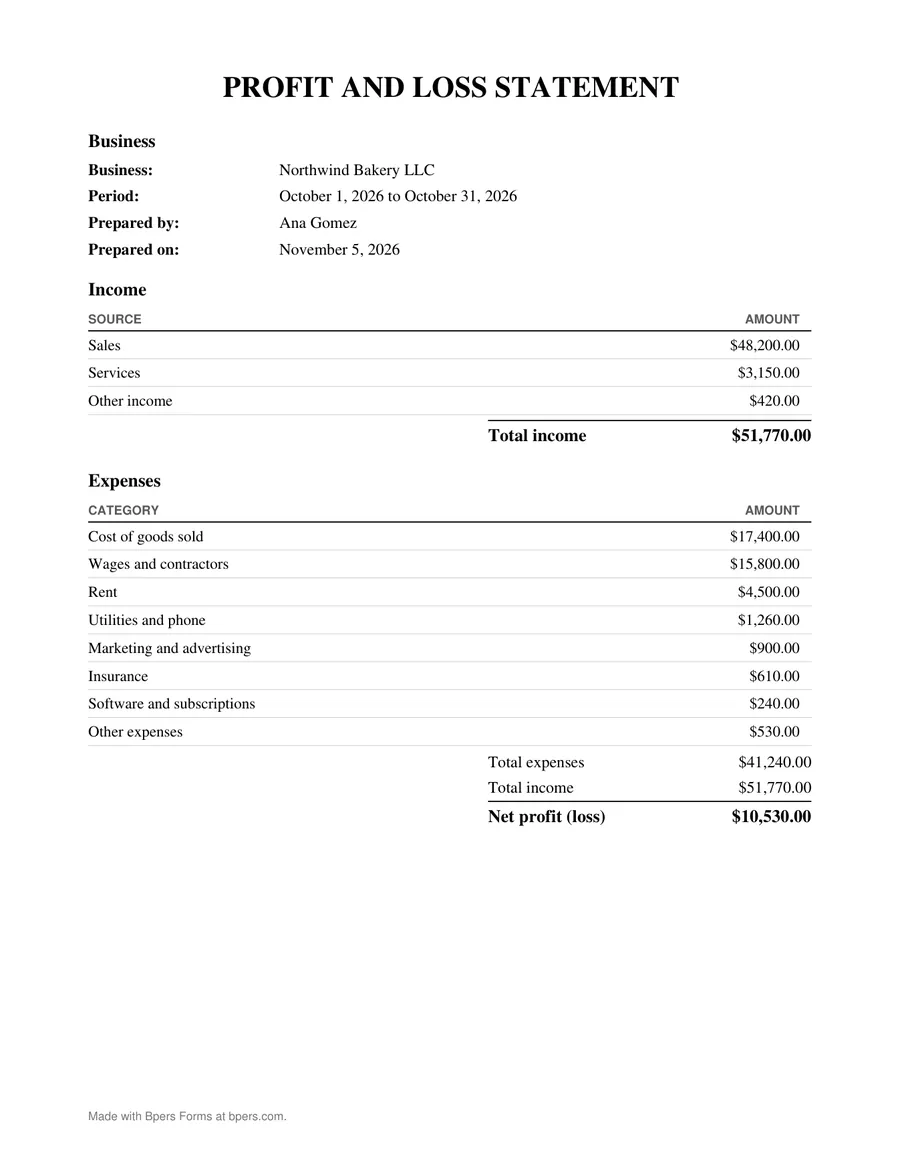
A profit and loss statement (P&L, also called an income statement) answers one question for a chosen period: did the business make money? It adds up income, subtracts expenses, and shows the difference as net profit, or a loss when the number is negative.
Lenders and landlords often ask for one, and it is the simplest way to see month by month which costs are growing faster than sales.
Pick the period first
Choose a month, a quarter or a year, and include only money earned and spent in that window. Comparing the same period each time (this March against last March, for example) shows real trends instead of seasonal swings.
Filling it in
- Income: enter sales and service revenue for the period. Leave out loans and money the owner put in: that is funding, not income.
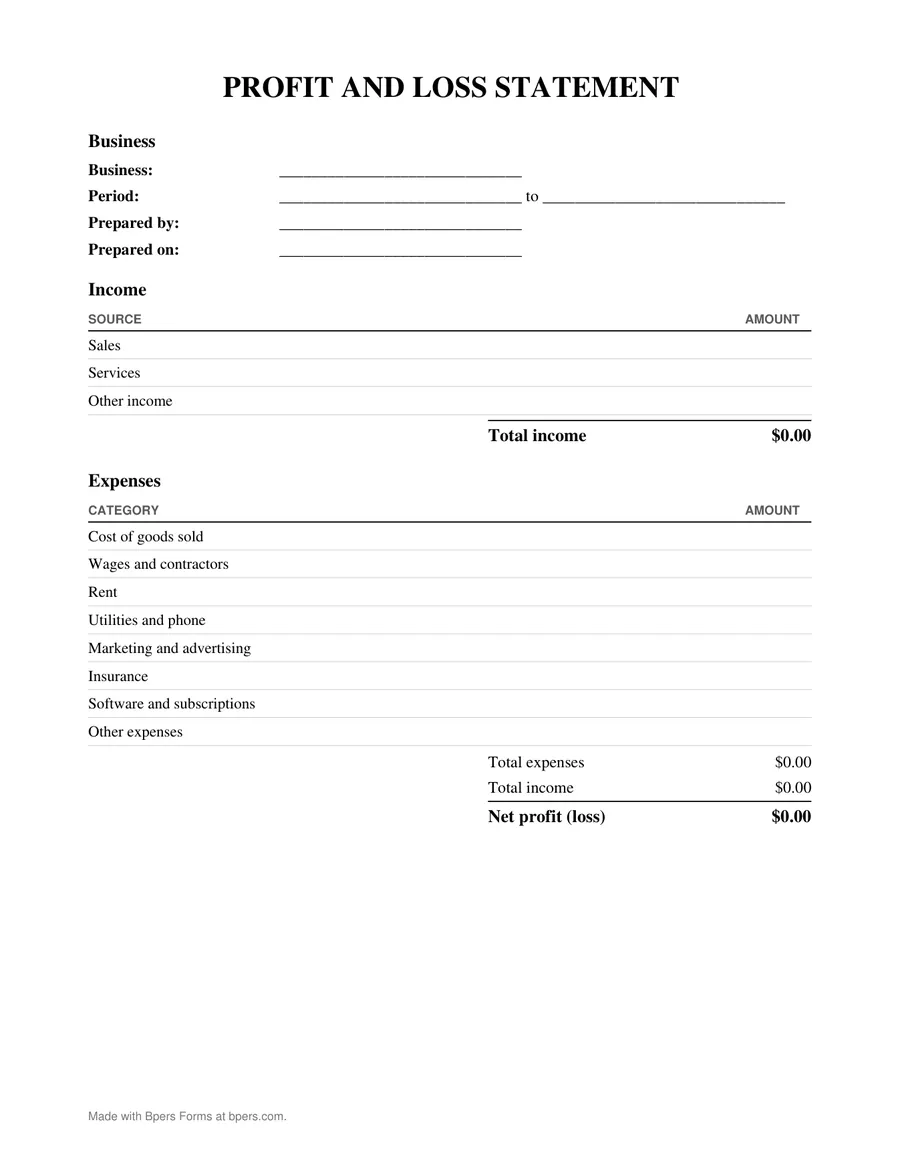
- Expenses: the common categories are filled in for you. Rename, remove or add lines to match your books.
- Cost of goods sold is what the things you sold cost you to buy or make. Keeping it on its own line shows your margin at a glance.
- Check the net figure. A negative number appears as a loss, with a minus sign.
Reading the result
Divide net profit by total income to get your profit margin. Then look at the biggest expense lines: they are where a small change makes the most difference. Use the notes line to explain anything unusual, such as a one-off equipment purchase, so whoever reads it later understands the numbers.
Common questions
Is this the same as a cash flow statement?
No. A P&L shows profit for the period; a cash flow statement shows money moving in and out of the bank, including loans and owner draws.
Can I use it for my taxes?
It is a useful summary to hand your accountant, but tax forms have their own categories and rules. Use it alongside your records, not instead of them.
Can I add more expense lines?
Yes. Press "Add an expense line", up to 40 lines. Lines you leave empty don't appear on the PDF.
Is my financial data stored?
No. Everything stays in your browser and the PDF is created on your device.